 What is Hot Dip Galvanizing?
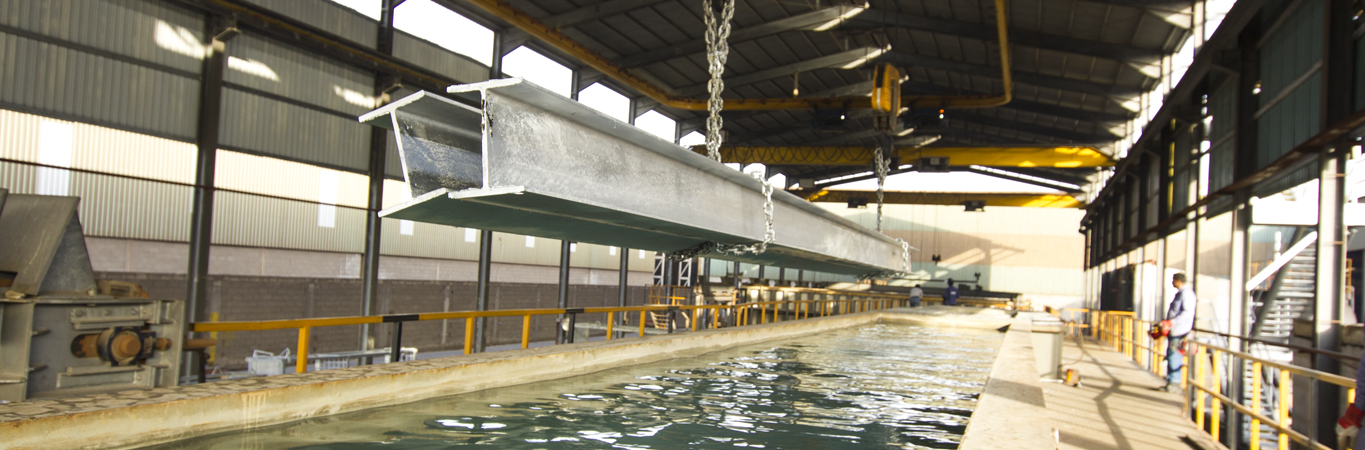
Hot Dip Galvanizing is the process of coating iron or steel with a layer of zinc by immersing the metal in a bath of molten zinc at a temperature of around 449°C (840°F). When exposed to the atmosphere, the pure zinc (Zn) reacts with oxygen (O₂) to form zinc oxide (ZnO), which further reacts with carbon dioxide (CO₂) to form zinc carbonate (ZnCO₃), a usually dull grey, fairly strong material that stops further corrosion in many circumstances, protecting the steel below from the elements.
Galvanized steel is widely used in applications where corrosion resistance is needed without the cost of stainless steel, and can be identified by the crystallization patterning on the surface (often called a "spangle").
The galvanizing process consists of three steps:
MSCC galvanizes steel in accordance with the following international standards: